

Blog
Discover Martil
Historic Martil Tower: A tourist attraction that attracts visitors to Morocco | AMARTIL

Perhaps the most prominent monument that the city of Martil is currently proud of is its tower, which is located to the left of the mouth of its river. The date of its construction is likely to date back to the era of Sultan Moulay Ismail in the year 1132 AH, corresponding to 1720 AD, by Commander Ahmed bin Ali Al-Pasha Al-Rifi. It is a tower, although time has left its mark on it, but it is still tall and tells of important periods in the history of Morocco and the stage of jihad against the European invaders after the fall of... Andalusia, monitoring the coast of Tetouan, and acting as an early warning sign when dangers arise.
The tower's urban architecture embodies the originality of Moroccan construction, which combined what is uniquely Moroccan and delightful Andalusian. It gave the tower not only a military dimension but also an aesthetic and artistic dimension with its prominent arches, high domes, and symmetrical corridors that make the viewer attracted to the genius of the Moroccan engineer and builder.
It is the tower, which the researcher Khaled Al-Rami said in his book “Tétouan during the Eighteenth Century, History and Construction” that it is “a tall, fortified building that takes several different geometric shapes, including a square, a rectangle, a circle, or a polygon. Its construction material also varies, and is made of stone, brick, or some of these common materials.”
Khaled Al-Rami considered that the Martell Tower “is classified under the category of marine towers. It was relied upon to monitor the coasts of the city of Tetouan and provide early warning when dangers emerged from the sea side. In addition, this tower is equipped with cannons to repel attacks by enemy ships,” which makes the tower a multi-specialized military building.
The Martil Tower is one of the few towers in northern Morocco that received attention for repair and construction during two important stages of Moroccan history: the first construction period during the reign of Mawla Ismail and the period of Sultan Sidi Muhammad bin Abdullah, who ordered its construction to be renewed during his visit to the city of Tetouan in 1173 AH / 1760 AD, which reflects the importance that the Sultans of Morocco attached to this region, which aroused the ambitions of invaders coming from Europe. Then.
Related articles
 Discover Martil
Get to know Martil | AMARTIL
For more than 3 months, the Amartil crew filmed episodes around all the neighborhoods of the city of Martil, and the introductory episodes for this...
 Discover Martil
Martil Rental Apartments for Students: Best Options and Affordable Prices Near Universities
Apartments for rent in Martil for students: the best options and reasonable prices near universities At the beginning of each university season, ma...
 Useful information
Where are the markets in Martil? | AMARTIL
Where are the markets in Martil? After coming to the city of Martil, this question is one of the first questions you will ask after renting a furni...

Top 10 Places to Visit in Martil: A Comprehensive Guide for the Tourist | AMARTIL
The 10 best places to visit in Martil: a comprehensive guide for touristsIntroduction: Martil, this charming coastal city in northern Morocco, is a...
 Martil real estate
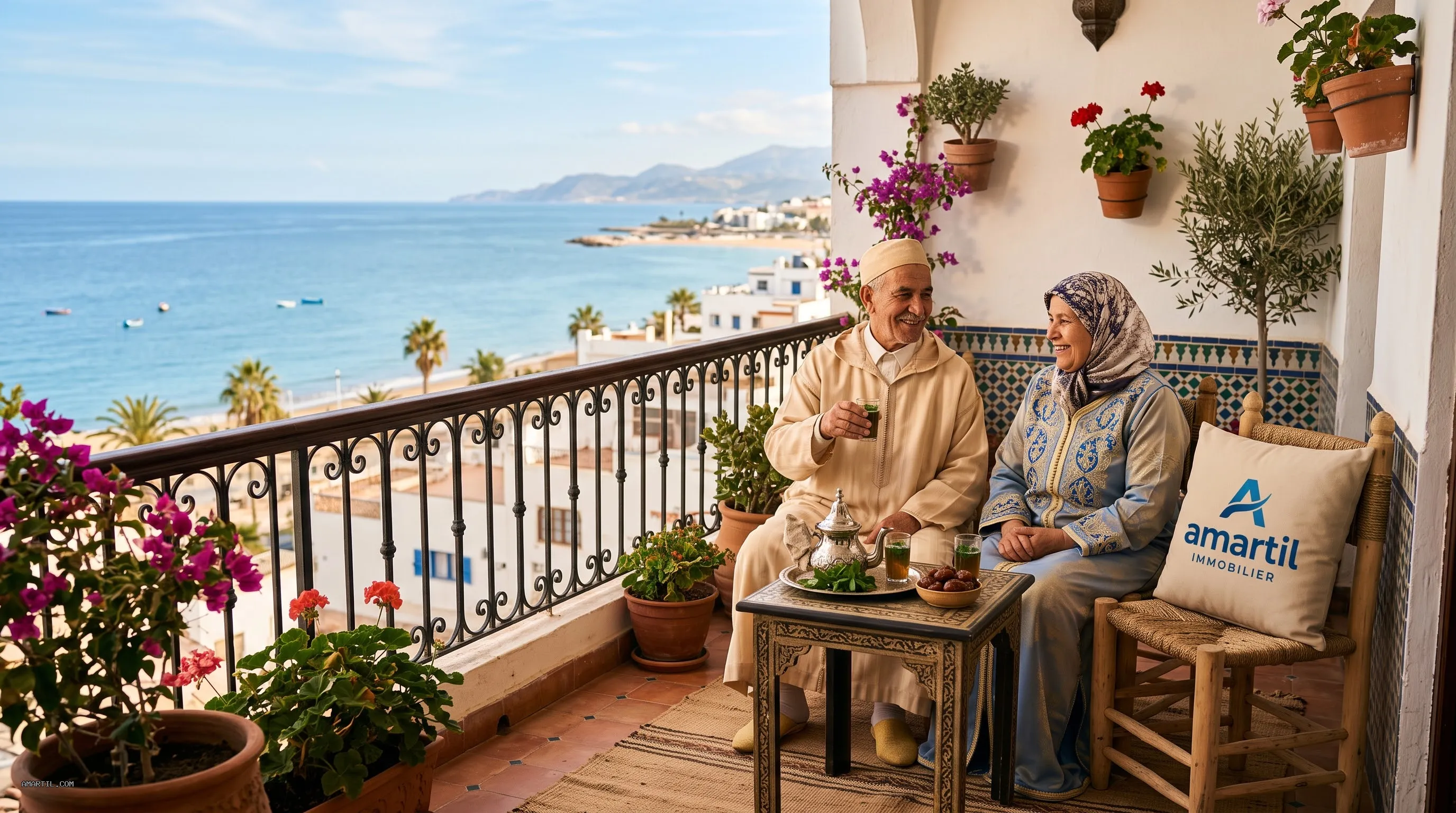
Apartments for rent in Martil are suitable for retirees looking for a quiet atmosphere near the sea AMARTIL
The retiree looking for apartments for rent in Martil usually does not look for large space or heavy traffic, but for calm, proximity to the sea, e...
 Martil real estate
How do you prepare for the summer season if you are looking for an apartment to rent in Martil? | AMARTIL
Early preparation is the real difference when you are looking for apartments for daily rent or location journalière or daily rent or appartement à ...